I’ve sat through enough press conferences at Melwood and the AXA Training Centre to know one thing for certain: when a manager tells you a player is "day-to-day," they are either guessing or stalling. They aren't telling you the truth. If they told you the truth—that a player’s connective tissue is currently screaming for mercy—it would kill their leverage in the transfer market and panic the fans. So, we get the corporate lines.

But the reality of sports science is far less elegant than the PR spin. Players don't just "get unlucky" when they pull a hamstring three days after returning to full training. That is an attempted reintegration failure. It is a system breakdown. And after 12 years of watching these cycles repeat, it’s clear that we have a massive disconnect between how we treat human biology and how we schedule https://xn--toponlinecsino-uub.com/the-day-to-day-lie-why-players-keep-breaking-down-after-returning/ a football match.
The Systemic Problem: It’s Not Just One Injury
There is a dangerous tendency in modern football to view injuries as isolated events. A defender goes down in a tackle; he gets fixed; he comes back. This https://reliabless.com/rehab-vs-load-management-why-football-is-still-getting-it-wrong/ is nonsense. As documented by FIFA’s medical research frameworks (inside.fifa.com/health-and-medical/research), elite athletes function in a state of high-performance equilibrium. When that is disrupted, the whole architecture of their physical capacity shifts.
If you lose a player, you aren't just losing his output on the pitch. You are shifting the load onto every other player in that system. This creates a cascade effect of fatigue. An injury is a failure of the system to manage load, not just a player twisting an ankle. We treat them like machines that can be swapped out. We forget that when a player returns to the pitch, their insufficient tolerance—their body's inability to handle the sudden spike in high-intensity demand—is the primary driver of the setback cycle.
Case Study: The 2020-21 Center-Back Crisis
If you want to understand the setback cycle in its rawest, ugliest form, look no further than Liverpool’s 2020-21 campaign. It was the perfect storm. Virgil van Dijk went down against Everton, and the tactical knock-on effects were catastrophic. Because the system demanded such an aggressive, high-line press, the drop-off in pace and structural security forced the remaining players to over-exert.
We saw midfielders like Jordan Henderson and Fabinho shifted into the back four. They weren't trained for the specific eccentric loading required to play center-back in a high-line system. They spent weeks playing out of position, accumulating microscopic tears in their muscles. They weren't injured, per se—they were just being destroyed by the demands of the tactical system. Eventually, the system broke them all. That wasn't bad luck. That was a direct result of tactical necessity overriding physiological reality.
The Tactical Cost of the Press
Modern managers want high-intensity pressing for 90 minutes. They want "heavy metal football" or suffocating positional play. But let’s be clear: the human body has a limit. When a player is sprinting 10-15% more than the average in their position, the recovery window between matches isn't just about sleep and protein shakes. It’s about the nervous system catching up.
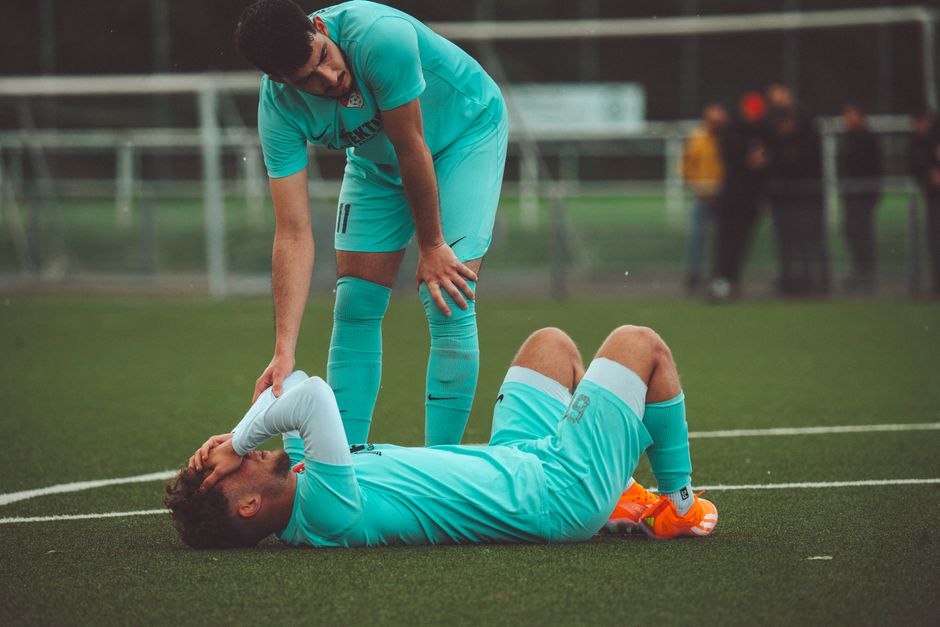
When a player rushes back from injury, they are often returning to a training load that their body has forgotten how to handle. This is the core of the insufficient tolerance issue. They are playing at a Premier League intensity with a body that hasn't completed the necessary adaptation phase. It’s not science; it’s a gamble. And usually, the player loses.
Recovery vs. Return to Play: The NHS Lesson
The NHS provides a very clear distinction between "recovery" and "return to play" for the general population. Recovery is the healing of tissue; return to play is the recalibration of the body to handle functional stress. In professional football, we often conflate the two. We see a scan showing the muscle has healed, so we clear the player for training.
That is a mistake. Healing is a biological process; athletic readiness is a structural one. If you have been on the shelf for six weeks, your tendons have lost their stiffness. They can’t handle the ground reaction forces of a 30-yard sprint. You can't fast-track this. Yet, because the team is struggling or the fixture list is packed, we see players pushed into "modified training." It’s a polite term for a bridge to nowhere. You aren't getting them ready; you're just putting them in the shop window for the next injury.
Comparison: PR Speak vs. Reality
The Press Conference Quote The Reality "He’s back in light training." He’s jogging in a straight line and hasn't tested his range of motion. "We are monitoring him day-to-day." We have no idea if his tissue will hold up to a turn at full speed. "He’s ahead of schedule." He’s a ticking time bomb and we’re desperate for him to play. "It’s a minor setback." The setback cycle has officially restarted; add 4-6 weeks.Why Fixture Congestion is a Death Sentence
The calendar is the silent killer. When you have a match every three days, there is no time for the body to adapt to the return of training stimulus. You are essentially training in a constant state of accumulated fatigue. This is speculative, but I’ve seen it time and again: the best medical teams in the world are fighting a losing battle against the fixture computer.
You cannot have a "process-oriented" return to training when the manager is screaming for the player back by Saturday. The player knows it. The medical staff knows it. The manager knows it. And yet, the cycle continues because the financial stakes are so high that sitting a star player for an extra week of "insufficient tolerance" conditioning feels like a luxury we can't afford. It’s a fallacy. The biggest cost isn't resting a player for a week—it’s losing them for three months because you were impatient.
How to Break the Cycle
If we are going to stop this, we need to change the conversation:
Acceptance of Biological Timelines: Stop treating tissue repair like a software update. It doesn't get faster because you want it to. Transparency in Load Management: If a player is returning, there should be a period of "invisible training"—individualized, high-load work that mimics the game, not just jogging with the squad. Tactical Adjustments: If your star defender is returning, you don't play a high line for 90 minutes. You change the system to protect the player until they are physically "tolerant" of the load.I’ve written about this for over a decade. I’ve seen the same players limp back into the treatment room under the same managers, following the same "quick fix" logic. It is the most frustrating part of the job. There are no shortcuts in biology. Until we stop pretending that a player’s body is a depreciating asset we can squeeze for every last drop of juice before it breaks, the setback cycle will remain the defining feature of the Premier League season.
Stop asking when they’ll be back. Start asking if they’ve actually been given the time to rebuild the tolerance required to survive the intensity of the game. Anything else is just waiting for the next headline.